Women and Time
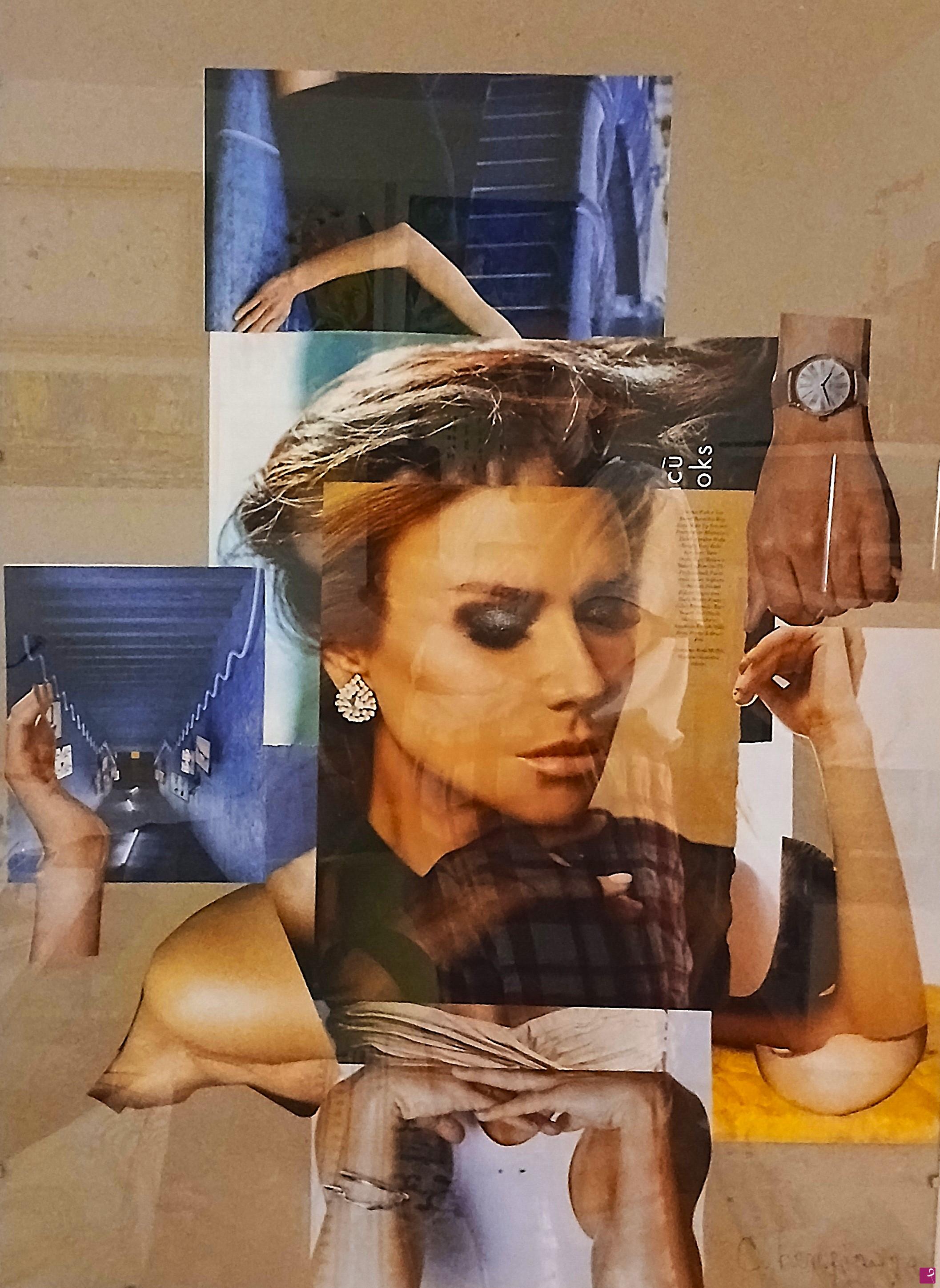
Description
The first thing that strikes the viewer about Snezana Pecujlija’s work is the fragmentation of the figure. The female body does not appear as a single, cohesive image; instead, it is composed of superimposed photographs, cutouts, body parts, objects, and details drawn from diverse contexts. This construction creates a kind of multifaceted identity, almost as if the subject were constantly being reassembled by the gaze of others and the surrounding environment. The face serves as the work’s visual focal point. The downward gaze and absorbed expression convey introspection, yet also a certain emotional detachment. Surrounding the face are widely varied elements: a hand, a watch, architectural features, fragments of clothing, and other photographic images. The result is deliberately unsettling: one can no longer say with certainty where the body ends and the image begins. The relationship between the body and the objects is particularly significant; the watch, clothing, photographs, and architectural elements seem almost to encroach upon the female figure. This aspect can be interpreted as a reflection on how the contemporary woman is represented and "constructed" through fashion, advertising, time, consumerism, and social expectations. The collage creates a temporal layering, offering a simultaneous view of different versions of the same person. The body thus becomes a sort of image archive. In this sense, the work speaks not only to female beauty but also to memory, transformation, and the construction of the self. The title, "Woman Energy," aligns with this interpretation: here, female energy is not depicted through a triumphant or idealized figure, but rather through a presence that is complex, fragmented, and vulnerable, yet simultaneously very strong.
Salvatore Russo

ask for information on this painting
Attenzione ! Tutte le comunicazioni con gli artisti sono gestite dalla redazione di PitturiAmo.
By the same artist

similar paintings 6