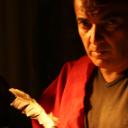
Stefano Trapanese

Biografia
Stefano Trapanese
Pittore figurativo e sacro | Salerno, 1963
Nel silenzio dell’infanzia, tra matite e fogli sparsi, nasce il gesto.
Stefano Trapanese, nato a Salerno nel 1963, non ha imparato a disegnare: ha semplicemente cominciato a vedere. Mentre il mondo correva, lui fissava i volti, la luce sulle cose, la grazia imperfetta della realtà.
La sua formazione tecnica — perito industriale, indirizzo informatico — non ha domato l’istinto artistico: lo ha solo sospeso nel tempo, come una nota trattenuta. Fino al 2010, quando la pittura chiama e non lascia scampo.
È allora che Stefano si affida alla tela come a una rivelazione.
Non cerca l’astrazione, non insegue mode. La sua mano cerca la carne, la luce, il mistero. Dipinge l’umano nell’incontro col sacro e con l’antico classico. Le sue opere non illustrano: interrogano. Dei e ninfe e poi apostoli, angeli e santi — figure colte nel momento in cui il divino sfiora l’umano.
Il barocco napoletano, la lezione seicentesca, il chiaroscuro profondo sono presenza viva nel suo lavoro. Ma c’è anche un tratto moderno, inquieto, personale: lo sguardo del pittore non imita, ascolta. Le sue tele, spesso monumentali, raccontano storie che hanno attraversato i secoli, eppure vibrano nel presente.
Nel 2011 realizza l’opera “San Matteo e l’Angelo” per la Città di Salerno: una tela di grande forza visiva e spirituale, in cui la mano dell’angelo guida il gesto dell’evangelista, come fosse lo stesso pittore a farsi strumento.
Le sue opere sono oggi custodite in chiese, collezioni private e spazi pubblici, tra fede e contemplazione.
Chi guarda un quadro di Stefano Trapanese entra in uno spazio sospeso: un tempo lento, carico di senso, in cui la pittura torna ad essere preghiera visiva.
____________
Stefano Trapanese
Figurative and Sacred Painter | Salerno (IT), 1963
In the quiet of childhood, among scattered pencils and paper, the gesture was born.
Stefano Trapanese, born in Salerno in 1963, never learned to draw—he simply began to see. While the world rushed by, he observed faces, the play of light on objects, the imperfect grace of reality.
His technical education—an industrial diploma in computer science—did not suppress his artistic instinct; it merely held it in suspension, like a note sustained in time. Until 2010, when painting called—insistently, irrevocably.
From that moment on, Stefano entrusted himself to the canvas as to a revelation.
He does not seek abstraction, nor follow trends. His hand searches for flesh, light, mystery. He paints the human form in its encounter with the sacred and with classical antiquity. His works do not illustrate—they question. Gods and nymphs, apostles, angels, and saints—figures caught in the instant when the divine brushes against the human.
The Neapolitan Baroque, the lessons of the 17th century, and deep chiaroscuro are living presences in his work. Yet there is also a modern, restless, deeply personal quality: the painter's gaze does not imitate—it listens. His canvases, often monumental in scale, recount stories that have crossed centuries and still resonate in the present.
In 2011, he created Saint Matthew and the Angel for the City of Salerno(Italy): a painting of striking visual and spiritual power, in which the angel’s hand guides the gesture of the evangelist—as if the painter himself had become the instrument.
His works are now housed in churches, private collections, and public spaces, suspended between faith and contemplation.
To stand before a painting by Stefano Trapanese is to enter a suspended space: a slow time, rich in meaning, where painting once again becomes a visual prayer.

